My early conversations about Midjourney, when it broke into public consciousness, dwelt on the tension over gen-AI’s vague potential for creative arts and, on the more ominous hand, its destructive potential. Later, as it became obvious that the technology was crude and stupidly plagiaristic, these discussions shifted mostly to the latter end of this scale: how gen-AI would be used to dismantle professional artists.
The person with whom I was having the most knowledgeable of these conversations is a self-employed graphic artist and animator. After he lost his job in the first .com/video game crash a few decades ago, he established a successful animation house that he’s run since. The implications of gen-AI were obvious to him.
They were only slightly less so for me. Whereas much of the early anxiety was centered on the loss of artistic work, the pivot to education and replacing teachers–with replacing school–happened quickly enough. In that my entire career has been in American public higher-ed (already under human threat), this was just another slap. AI fever-dreamers have since imagined the ends of almost every kind of work and human pastime.
Even that is an old fantasy, a fantasy of factory owners and landlords, and I think that hasn’t changed much. What is more interesting to me is the form of reaction that is shaping up, which may be just as old. I think of General Ludd and the framebreakers and rick-burners of the 18th century, whose choice was economic (and, often enough, interpersonal) violence in the face of the extinction of home manufacture.
The Luddites failed, and we’ve watched similar, desperate, doomed resistance following the spread of industrialization. The economic and social forces behind these changes are familiar enough to us now, not to mention their general intractability.
© 2025Artistic reaction has been more successful in the sense that vibrant movements and traditions emerged out of socio-technological changes, not all of them resistive. Most frequently, new technologies are absorbed or even co-opted–this will happen with gen-AI, too.
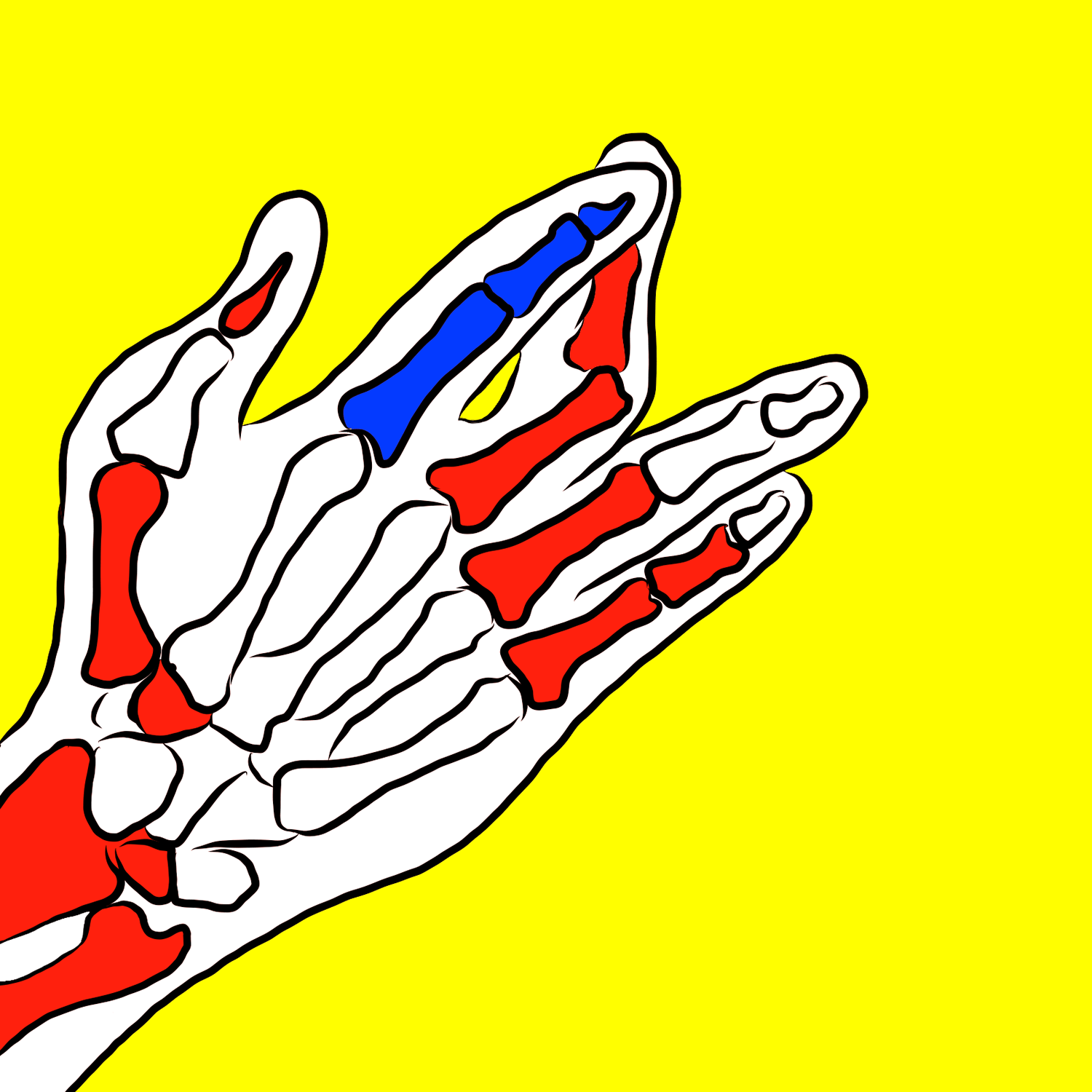
But I think that the emergence of gen-AI is not entirely the same as other technological developments. First of all, it just doesn’t work very well. Gen-AI’s basic struggles with depicting human hands is about as symbolically satisfying as it gets, and the fact is that most AI-generated artifacts are garbage. There’s a reason it’s mostly used for making memes.
The bigger reason is this: humans might stop making widgets when a substitutive technology arises, but they aren’t going to stop making art. And while a machine-made chair works just fine, a machine-made novel never really will. Though a chair can be a beautiful object, it doesn’t need to be, and at some level, we can probably be satisfied with a drab chair that keeps our asses off the floor. But what’s a functional novel? Is it just a bad novel? Or not a novel at all?
(spoiler: it’s the last one)
Percy Shelley framed art–poetry for him, mostly–as the only available means to understand other people’s interiority. It’s as close as we can come to inhabiting another mind; it’s the key power of art, along with its capacity to shed reflective light on the observer’s consciousness, and AI slop simply does not–cannot–achieve that.
There is no mind to inhabit, wonder about, study, be perplexed by. How can I evaluate my own thinking, values, beliefs in the face of a gilded Mad-lib? AI-generated material is barely even that, barely material at all. It can’t be admired or loved. It can’t form an imaginative connection with its readers or listeners or viewers–it’s like idolizing a roulette wheel.
So what is the appropriate reaction, beyond howling? (and howling is appropriate, but that’s just the recognition of the outrage of AI, and neither the billionaires nor their server farms care)
The real, meaningful reaction to this abominable attempt to drain art of any of its power is to continue to create more art. More music. More novels. More comics, paintings, dance, sculptures, vases, textiles.
More.
Because people will choose art. They will continue to make it. They will continue to love it because AI excretion tells us nothing. Communicates nothing. Provides no understanding or enjoyment or pain or shock or wonder. Because it is empty and human art is not.
So when I wrote above that artistic reaction to socio-technological change has been successful, we can ask whether it has been or will be in the case of gen-AI. The answer is obviously, monumentally, totalizingly fucking yes.
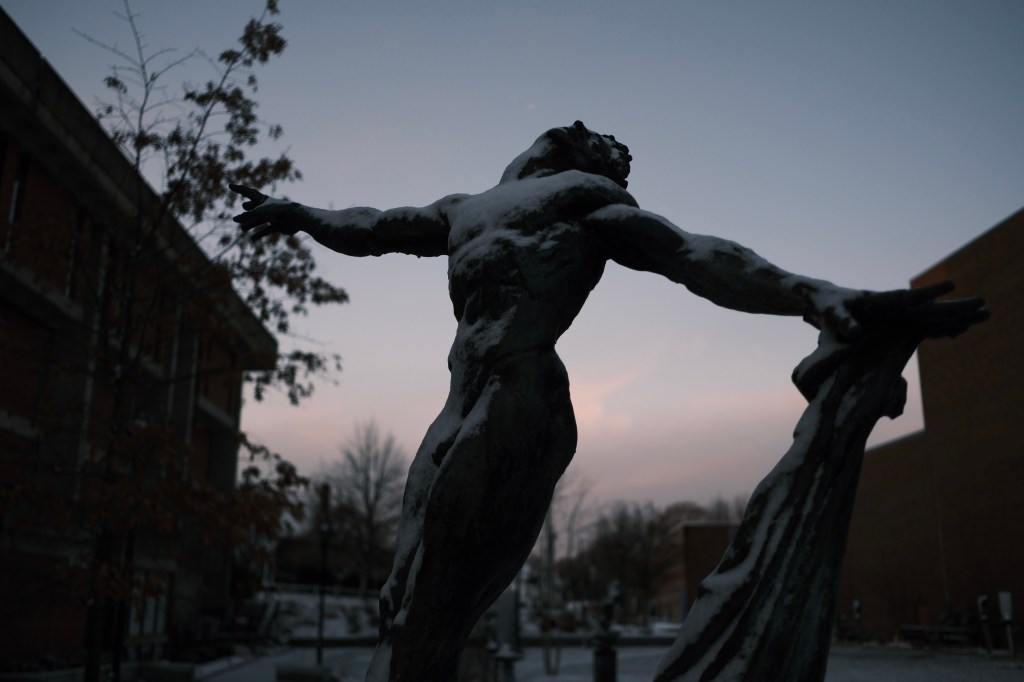
NOTE: all of the material in this post was created by me, DTL. A human. The photo was taken by me, the words are mine, and the drawing is mine, based on another human’s hand, which I accidentally broke during a pick-up basketball game. The other human was nice enough to provide me a shot of his x-ray, which I have repurposed as a symbolic rejection of AI slop.
 Derek T. Leuenberger